
 Home
Home
Building future
worth through data
Creating future worth through data.
worth through data
Total 73 Posts
-
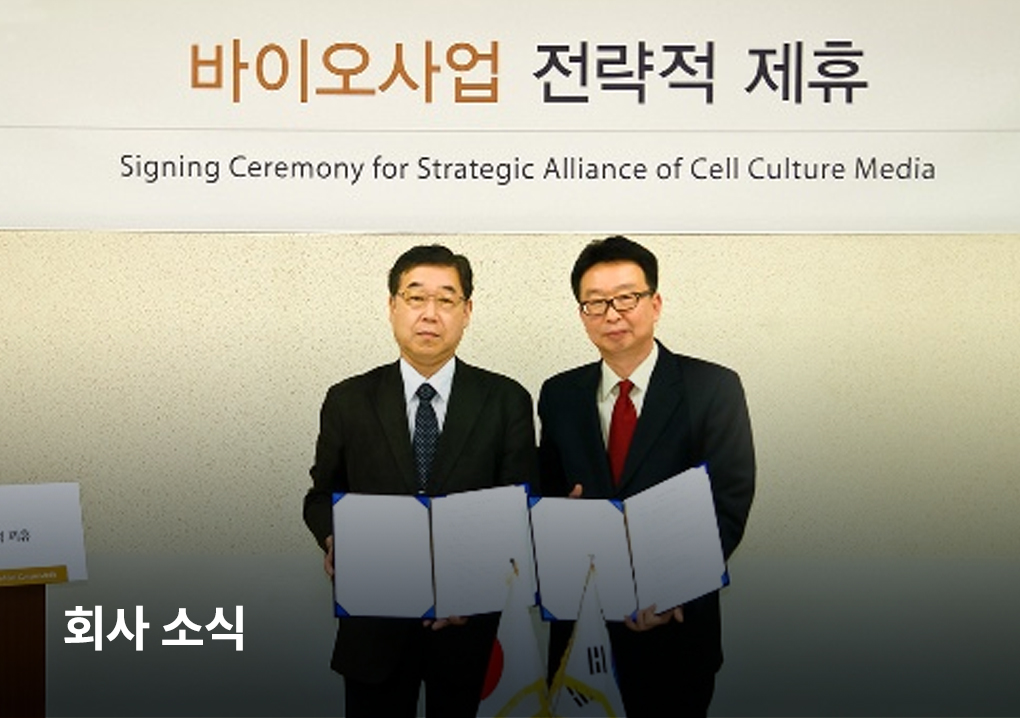 Daehan New Pharm Enters the Cell Culture Media Business for Biopharmaceutical Research and ProductionDae Han New Pharm Co., Ltd. Enters the Cell Culture Media Business for Biopharmaceutical Research and Production Supply of culture media used by Dr. Shinya Yamanaka, Nobel Laureate in Physiology or Medicine in 2012, to the domestic marketTargeting the domestic cell culture media market worth 300 billion KRW through factory construction promotionFollowing the domestic supply of Protein A last November, establishing the foundation for the second phase of biopharmaceutical business growth Mid-sized pharmaceutical company Dae Han New Pharm (CEO Bae Kun-Woo) announced that it has formed a strategic partnership with Japanese companies CSTI and Ragass for the domestic supply of cell culture media, essential for biopharmaceutical research, development, and production, and for building a domestic production plant. Cell culture media refers to liquid or powder products containing various amino acids and growth factors for culturing animal-derived cells or tissues. With the active development of biopharmaceuticals, the domestic culture media consumption market is estimated to be worth approximately 300 billion KRW. Conventional culture media uses serum for cultivation, which can trigger immune rejection reactions, but CSTI’s serum-free media only contain clinically proven safe ingredients, making them suitable for clinical use. Through this partnership, Dae Han New Pharm can supply various culture media domestically, including: Culture media for CHO cells used in therapeutic protein production Culture media for NK cells, a type of white blood cell Culture media for LAK cells which inhibit cancer growth Culture media for iPS cells, induced pluripotent stem cells Notably, CSTI’s iPS cell culture media is globally recognized for its technology and safety, supplied to Dr. Shinya Yamanaka, Nobel Laureate in Physiology or Medicine 2012. Its T-lymphocyte culture media occupies 70% of the Japanese immune cell therapy market. CEO Bae Kun-Woo of Dae Han New Pharm stated, “We expect strong demand from biotech companies and university research facilities in the domestic market for culture media supply with competitive quality and pricing,” and “We will provide high-quality, customized one-on-one technical services.” Meanwhile, Dae Han New Pharm signed a consulting agreement with Japanese company Ragass for culture media manufacturing and technology transfer for the construction of a domestic plant. With the introduction of global technology, they expect to enable direct domestic production and supply of culture media, improving technology and price competitiveness simultaneously. Starting with the first phase of the bio-business with the Protein A supply contract with Korea, China, Japan, and the US in November last year, Dae Han New Pharm solidifies its growth foundation for the second phase with the supply and production contract for cell culture media. Glossary:CHO cells (Chinese Hamster Ovary cells)These are cells derived from hamster ovaries mainly used in therapeutic protein production for biopharmaceutical development. iPS cells (induced Pluripotent Stem cells)Mature somatic cells genetically reprogrammed to return to a pluripotent stem cell state similar to embryonic stem cells, also known as "reprogrammed stem cells." Successful derivation of such cells from adult skin cells was independently achieved by Professor James Thomson’s team in the US and Professor Shinya Yamanaka’s team in Japan in late 2007. LAK cells (lymphokine activated killer cells)Cells derived by culturing human peripheral lymphocytes or mouse lymphocytes with lymphokines such as interleukin-2 (IL-2), which become activated and exhibit anti-tumor activity. NK cells (natural killer cells)A type of white blood cell produced in the human bone marrow that can directly kill cancer cells, known in Korean as “natural killer cells,” possessing specific proteins (MHC). SerumThe transparent liquid separated when fresh blood is left standing, containing various growth factors and used as an additive in cell culture. T-lymphocytesLymphocytes involved in immune response; T cells assist B cells in antibody production and directly destroy foreign substances. Abnormalities in T cells can lead to immunodeficiency and diseases such as adult T-cell leukemia.2013.01.22
 -
 Research and Development of Chlorella Production in Collaboration with Professor Sim Sang-joon’s Team at Korea UniversityResearch and Development of Chlorella Production with Professor Sim Sang-joon’s Team at Korea University For Green Growth: Development and Production of High-Value Protein MaterialsDaehan New Pharm Co., Ltd. collaborates with Professor Sim Sang-joon’s research team at Korea University on Chlorella production research and development. Daehan New Pharm Co., Ltd. and Professor Sim Sang-joon’s research team at Korea University announced that they have signed a two-year (2013–2014) research agreement for “the development and production of high-value protein materials (Chlorella) using carbon dioxide (CO₂) reduction technology.” The agreement states that all production outcomes and intellectual property resulting from the project will be jointly owned by Daehan New Pharm and Professor Sim’s team. This high-efficiency microalgae cultivation process for CO₂ reduction utilizes microalgae (Chlorella) to recycle CO₂, a by-product generated from fossil fuel energy production. Korea University has organized an industry-academia joint research team and is currently developing a pilot-scale CO₂ capture system using microalgae with a semi-commercial capacity of about 10 tons. This project, jointly conducted by Daehan New Pharm and Korea University, aims to develop functional substitutes for protein materials and immune-enhancing supplements. Health supplements using Chlorella have been imported and sold in Japan for over a decade. In Korea, similar products are marketed by Company A as high-end health supplements. However, due to reliance on expensive carbohydrate sources and limitations in traditional Chlorella production methods, the high production cost has prevented Chlorella from becoming established as a source of protein for human or animal use. By contrast, Chlorella production utilizing CO₂ is expected to significantly reduce manufacturing costs while boosting productivity. It is projected to achieve an import substitution effect exceeding 100 billion KRW annually in the domestic feed protein market and make high-quality Chlorella health supplements available at more affordable prices, contributing to economic efficiency.2013.01.16
 -
Entry into the Next-Generation Biopharmaceutical Business through Domestic Supply of ‘Protein A’Entry into Next-Generation Bio Business through Domestic Supply of ‘Protein A’ “Core material for biopharmaceutical manufacturing, diversification of domestic supply routes opened” - Daehan New Pharm Co., Ltd. advances into the next-generation bio business with domestic supply of ‘Protein A’- Contributing to enhancing the international competitiveness of domestic pharmaceutical companies’ biopharmaceutical development by reducing costs- Breaking the exclusive supply structure and diversifying domestic supply of ‘Protein A’ through partnerships with Korea, US, China, and Japan Daehan New Pharm Co., Ltd. (CEO Bae Kun-Woo), a mid-sized KOSDAQ-listed pharmaceutical company, announced strategic partnerships with companies in Korea, the US, China, and Japan to diversify the domestic supply of ‘Protein A,’ an essential core material for biopharmaceutical production. With the expiration of patents on biopharmaceuticals, domestic companies accelerating biosimilar production can now escape the existing exclusive supply system and strengthen their international competitiveness in the biopharmaceutical field by reducing costs and improving research efficiency through diversified supply chains. Until now, domestic supply of ‘Protein A’ had been monopolized by GE (General Electric). In the strategic partnership, Daehan New Pharm has signed supply agreements with GenScript (US) and Pharmawin Japan, where GenScript handles product manufacturing and technical support, and Pharmawin oversees Asian sales marketing and technical support services. Itochu Shanghai (China) acts as coordinator for entry into the Chinese market, sharing advanced market experience and systems. The ‘Protein A’ supplied by Daehan New Pharm plays a crucial role in determining efficiency, time, cost, and purity in biopharmaceutical manufacturing. Korean companies, research institutes, and universities use ‘Protein A’ extensively in purification processes, with annual usage expected to exceed 5,000 liters, roughly worth 60 billion KRW. Major domestic biopharmaceutical companies include Celltrion, Samsung Biologics, LG Life Sciences, Hanwha Chemical, AProgen, HanAll BioPharma, Hanmi Pharmaceutical, and Green Cross, all anticipated to replace ‘Protein A’ every six months. Daehan New Pharm plans to expand its product portfolio through continuous technological partnerships and supply essential products for biopharmaceutical production in Korea, with future technology transfer expected to support market growth. CEO Bae Kun-Woo said, “The agreement includes mutual cooperation among four countries to continuously enhance Daehan New Pharm’s involvement in bio products and services and provide total solutions for biopharmaceutical processes. Daehan New Pharm holds the Korean market rights for ‘Protein A’ and will serve as a joint partner in expanding into the Asian market.” GenScript co-founder Dr. Luquan Wang and Pharmawin chairman Mr. Okamoto, participants in the signing ceremony, stated, “Discussions with Daehan New Pharm began early, and the agreement process has proceeded smoothly based on trust and cooperation. All four participating companies recognize their mutual importance and are determined to collaboratively pioneer the biopharmaceutical market.” Founded in 1984, Daehan New Pharm is a research and development-focused mid-sized pharmaceutical company that develops and produces a diverse range of products from specialty pharmaceuticals to obesity solutions, veterinary medicines, and genetic development. Since its KOSDAQ registration in 2002, it has moved toward specialized affiliated industries and entered the bio business to become a global pharmaceutical hidden champion aiming to create a comprehensive health and welfare company (Pharmatopia) for a healthy and happy life. ■ Reference: Bio Business Market OutlookThe global pharmaceutical market is approximately $769.7 billion, with biopharmaceuticals accounting for about $104.6 billion, approximately 13.6% of the total market. Biopharmaceuticals are rapidly growing at an average annual rate of about 17.3%, expected to exceed $160 billion in 2013 and account for over 30% of the total pharmaceutical market. Korea’s biopharmaceutical growth is also highly regarded abroad. The respected US RAND Institute projected that Korea’s biopharmaceutical technology would reach 95% of the US level by 2020 and predicted growth to 15 trillion KRW within seven years. Biopharmaceuticals are categorized as bio originals, biosimilars, and biobetters. Biosimilars are generic protein antibody drugs with verified safety and efficacy, requiring significantly lower R&D costs and shorter development times than new drug development. Since 2012, numerous blockbuster protein drug patents have expired, with 21 blockbuster protein drugs expiring over three years, generating about $73.9 billion in revenue. Biobetters improve upon original biopharmaceuticals by enhancing efficacy and reducing side effects. They are considered second-generation biopharmaceuticals following biosimilars. Biobetter development is ongoing in Korea, Japan, China, the US, and Europe, with the market expected to grow to approximately $400 billion by 2020.2012.11.05
-
Launch of New Veterinary Product ‘Deowigara’The new veterinary product Deowigara has been newly launched to prevent heat stress in livestock during the summer season. Deowigara is a combined formulation of betaine and vitamin C that effectively regulates osmotic pressure to alleviate dehydration symptoms caused by heat stress and enhances productivity even during heatwaves. It also promotes lipid metabolism in the liver to relieve fatty liver and boosts immune function to improve overall productivity. Key Features: - Alleviates dehydration symptoms through osmotic pressure regulation- Reduces heat and coccidial stress- Mitigates and minimizes summer mortality- Enhances productivity in broilers and laying hens- Reduces feed formulation costs by replacing choline and methionine- Improves meat quality and relieves fatty liver in laying hens2012.06.29
-
Daehan New Pharm's 'Lipi-C Injection' Enters the Chinese MarketLipi-C Injection Enters the Chinese Market Despite challenges such as drug price reductions and FTA agreements, the pharmaceutical industry is seeking breakthroughs through overseas market expansion. On May 21, Daehan New Pharm Co., Ltd., a KOSDAQ-listed company, signed a three-year supply agreement with a Chinese pharmaceutical company (Guangdong Longkang) for its liver disease injection Phosphatidylcholine (brand name: Lipi-C Injection). After approximately 18 months of clinical trials, the product is expected to be released to the Chinese market, with sales projected to begin in 2014. The estimated revenue over the contract period is around KRW 30 billion (based on current transaction prices). Phosphatidylcholine, a liver disease treatment injection, is a unique product originally monopolized by Germany’s Lipoid GmbH, which supplies the raw material under an exclusive agreement with global pharmaceutical giant Sanofi Aventis, dominating the global market. In South Korea, only two companies, including Daehan New Pharm, hold approval for sales under the Ministry of Food and Drug Safety’s PMS (Post-Marketing Surveillance) program. Meanwhile, Sanofi Aventis maintains exclusive rights in China, generating approximately KRW 100 billion in annual sales for liver and fatty liver treatments. Daehan New Pharm has built its operations around specialization, focus, and globalization as its core strategy, aiming to become a healthcare pioneer that creates a richer world and happier lives through specialized products and customized solution-based marketing. The company operates its own wellness programs centered on vitamin and obesity treatment products, has achieved visible business results through innovative and differentiated strategies, and has already registered over 200 products in 40 countries. The recent contract for Chinese market entry is the outcome of this specialized portfolio, international business experience, strategic networking, and determination to overcome current challenges — a synergy expected to become a major growth engine for the company. Using the Lipi-C Injection’s entry into China as a foothold, Daehan New Pharm plans to expand its exports further within China and into Southeast Asian markets. The company’s strategic decision is expected to serve as a successful model for overcoming market difficulties in the pharmaceutical industry.2012.06.07
-
2012 First Quarter DisclosureDaehan New Pharm Co., Ltd., Despite Decreased Sales and Profit, Strengthens Internal Stability Daehan New Pharm Co., Ltd. reported a first-quarter sales revenue of 10,777 million KRW, a 15.9% decrease compared to the same period last year, and an operating profit of 1,075 million KRW (operating profit margin of 10.0%), down 28.1%. The main reason for the reduced performance compared to last year’s quarter was the absence of special demand for disinfectants worth 2,153 million KRW due to foot-and-mouth disease starting at the end of 2010, which had boosted results in the first quarter of 2011. Excluding this special demand factor, sales and operating profit remained at similar levels. Since the second half of 2011, Daehan New Pharm has been promoting the "Start-up Daehan New Pharm Project," focusing on strengthening business competitiveness and profitability and restructuring products and distribution channels, improving the quality aspect of sales. In preparation for the drug price reduction and FTA enforcement starting from April 2012, Daehan New Pharm is strengthening its focus and specialization on core competencies and areas where multinational corporations or large pharmaceutical companies do not participate, such as obesity solutions. The company plans to continuously enhance its unique product structure and increase customer assets through direct transactions and distribution efficiency strategies. Through this business portfolio structure, the company aims to absorb the impact of drug price reductions while promoting differentiated strategies to become a small but strong enterprise.2012.05.17
-
New Product ‘Coccimyeol-S’A clinical trial conducted by the Institute of Veterinary Medicine at Gyeongsang National University on broiler farms in the Gyeongnam region, where coccidiosis outbreaks are common, found that administration of “Coccimyeol-S” significantly reduced mortality rates compared to the control group. The study also observed reductions in fecal diarrhea scores and intestinal lesion severity upon necropsy. Coccidiosis affects all poultry species but occurs most severely in chickens and turkeys, causing major economic losses in the poultry industry. The protozoan parasites inhabit the intestinal tract, leading to diarrhea and enteritis, and in broiler farms, resulting in watery, loose, or bloody feces, reduced weight gain, and delayed shipping dates. Through this clinical study, Daehan New Pharm confirmed that the group treated with “Coccimyeol-S” exhibited relatively higher weight gain compared to the untreated group (using 22-day-old broilers infected with Eimeria spp., tested by the Institute of Veterinary Medicine, Gyeongsang National University). “Coccimyeol-S” offers a shorter treatment period of just two days and an economical treatment cost of approximately 4–8 KRW per bird, compared to existing coccidiosis treatments. The withdrawal period is also short at only five days, allowing safe use even in cases of short shipping cycles. Moreover, the product shows minimal drug resistance and does not cause the side effects associated with traditional coccidiosis treatments, such as decreased water intake or weight gain. Daehan New Pharm has also newly launched “Lactoplanta,” an antibiotic alternative derived from fermented fish sauce. [Published in Poultry Research, March 2012.]2012.04.13
-
Lactoplanta (Lactic Acid Bacteria Derived from Fermented Fish Sauce) LaunchedLactoplanta (Lactic Acid Bacteria Derived from Fermented Fish Sauce) Launched2012.02.20
-
Health Digest Lecithin TherapyHealth Digest Lecithin Therapy2011.12.23